The Mississippi Literacy Summit · Tuesday, October 27, 2026 · The Inn at Ole Miss, OxfordRegister →
What the Mississippi Miracle is

In 2013, Mississippi ranked 49th in fourth-grade reading.
By 2024, it ranked 9th.

That climb, the largest in the nation and first in the country when adjusted for demographics, is what educators call the Mississippi Miracle. It began with a 2013 law built on the science of reading. Two books tell how it happened, written by the governor who signed the law and the educator who helped build it.

49th2013 ranking
9th2024 ranking
#1in gains since 2013
40+states now following
“Mississippi is offering lessons for America on education.” Nicholas Kristof, The New York Times
The Nation’s Report Card

Read the numbers slowly.


The National Assessment of Educational Progress is the one test that allows an honest comparison across states. Here is what it says about Mississippi’s fourth graders.

9thin fourth-grade reading, 2024Up from 49th in 2013
1stwhen adjusted for demographicsUrban Institute analysis, 2024 NAEP
1stin long-term gains since 2013Reading and math, fourth grade
1stamong economically disadvantaged studentsFourth-grade reading, national comparison
89.2%high school graduation rateUp from 75 percent, above the national average
40+states have followedScience of reading laws or aligned policies, 2026
Mississippi’s climb in fourth-grade reading, national rank Lower is better. Rank among the 50 states on the NAEP fourth-grade reading assessment. 1st 25th 50th 20132015201920222024 49th 39thFirst test after the law 29th 21st 9th Climbed 40 spots in just over a decade First in the nation when adjusted for demographics
Source: The Nation’s Report Card (NAEP), U.S. Department of Education; Urban Institute demographic adjustment of 2024 results.

Beyond the average

Mississippi’s fourth graders now outperform the national average in reading, 32 percent proficient or advanced compared with 30 percent nationally. Only Massachusetts scored higher.

The children who needed it most

Economically disadvantaged fourth graders in Mississippi rank first in the nation in reading among their peers. A Black fourth grader in Mississippi is 2.5 times as likely to read proficiently as one in California.

Not a one-year bump

Every retained third grader is now studied. A Boston University study found students retained under the law posted large, sustained gains by sixth grade, especially Black and Hispanic students.

Two books, one story

The Mississippi Miracle, told from the inside


One for the leaders, teachers, and parents who want to know how it was done. One for the children who will grow up never knowing it was ever in doubt.

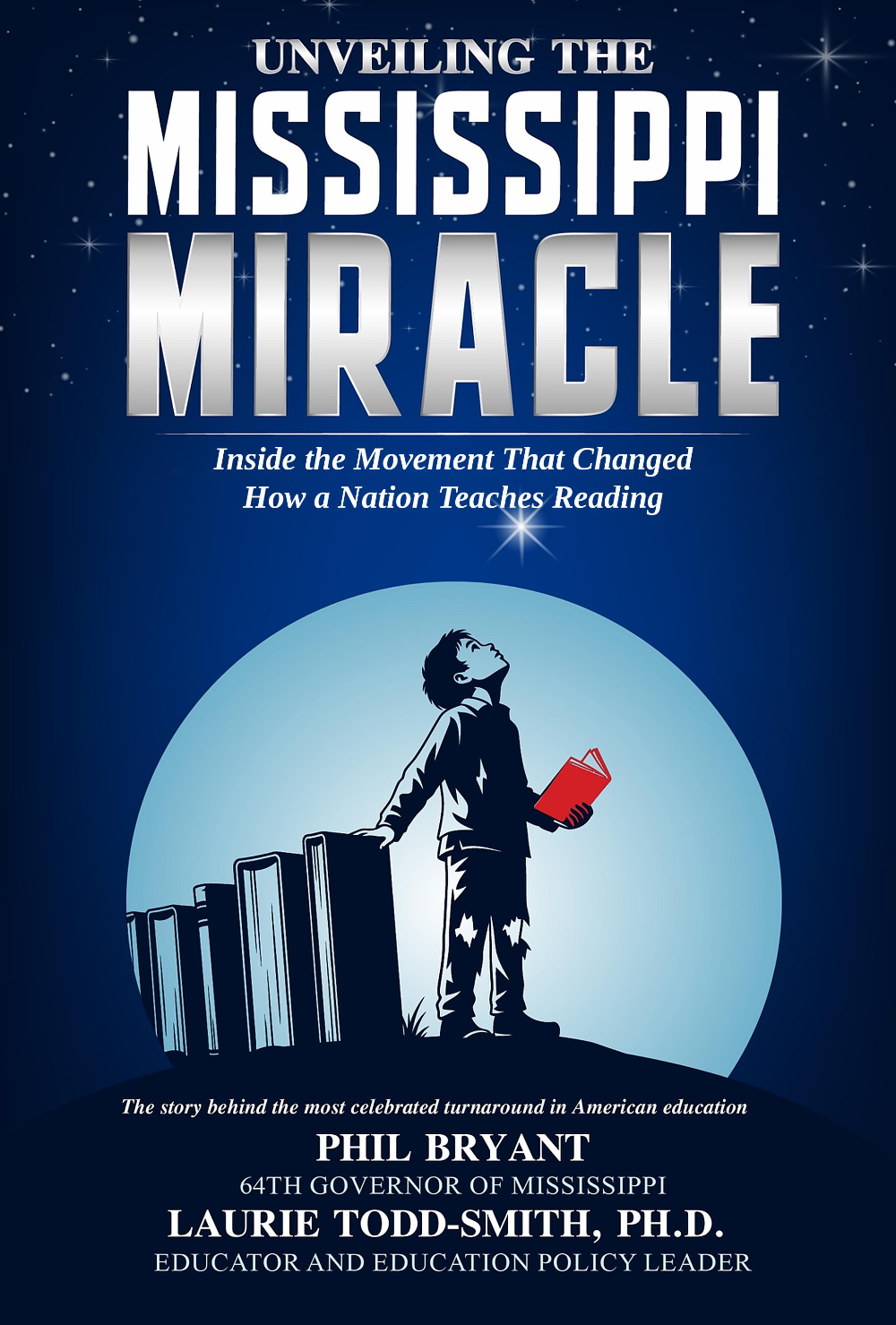
Unveiling the Mississippi Miracle cover
Nonfiction · 242 pages · Paperback 7×10

Unveiling the Mississippi Miracle

Inside the Movement That Changed How a Nation Teaches Reading
by Governor Phil Bryant and Laurie Todd-Smith, Ph.D.

In 2013, the poorest state in the country passed a reading law that the experts said would fail. Instead, Mississippi became the most closely studied education success story in America. This is the firsthand account from the governor who signed the law and the educator who carried the research into the Capitol: the history that made the hole so deep, the science that pointed the way out, the law itself and why every provision mattered, the people who made it real, and a practical guide for any leader who wants to do it in their own state.

Written in the authors’ own voices, it is the story of what happens when leaders decide the cost of doing nothing is too high, and when nobody cares who gets the credit.

13 chapters plus appendicesThe full text of the 2013 law and a model policyAppendix B: National media coverage and recognition, 2013 to 2026Original charts and photographs
“When we set out to pass Arkansas LEARNS, we didn’t have to guess whether bold literacy reform could work. Mississippi had already proven it. This book tells the story behind the results, and it gave us a roadmap we adapted for Arkansas kids. Every governor serious about education should read it.”Sarah Huckabee Sanders, Governor of Arkansas
“Mississippi proved that meaningful education reform is possible when leaders are willing to challenge the status quo and put students first. As Louisiana set out to rebuild our education system, we looked closely at what was working next door. The lessons shared in this book helped shape many of the reforms we pursued, and today Louisiana is making historic gains of our own. Mississippi’s success wasn’t an accident, and Louisiana’s progress isn’t either. This book is a testament to what can happen when leaders have the courage to make tough decisions and keep the focus where it belongs: on giving every child the opportunity to succeed.”Jeff Landry, Governor of Louisiana
“Gov. Phil Bryant and his team led an effort that showed meaningful progress is possible for every child, regardless of zip code, when educators, families, and policymakers work together. Today, Tennessee and Mississippi students are leading the nation in reading proficiency gains, and we’re showing the nation how it can be done.”Bill Lee, Governor of Tennessee
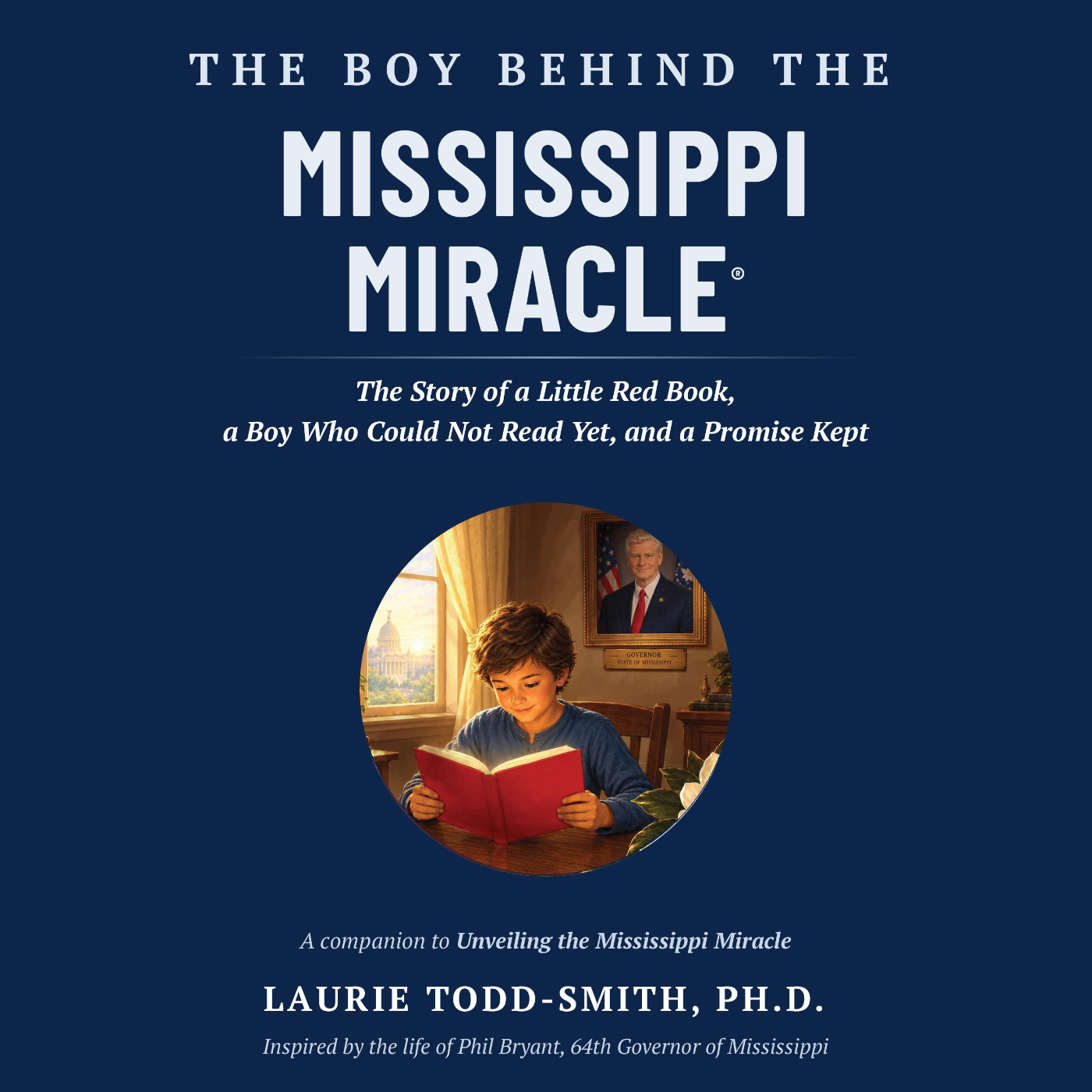
The Boy Behind the Mississippi Miracle cover
Picture Book · Ages 4 to 9 · Hardcover

The Boy Behind the Mississippi Miracle

by Laurie Todd-Smith, Ph.D.
Inspired by the true story of Governor Phil Bryant

In a South Jackson classroom in the early 1960s, every child had a colored reading book on the desk. Green meant you were a top reader. Yellow was the middle. Red meant you were falling behind. One boy sat behind a red book. He repeated third grade. Then a fourth-grade teacher named Mrs. Henley sat beside him, taught him how letters make sounds and sounds make words, and changed the rest of his life.

That boy grew up to be the Governor of Mississippi, and he signed a law so that every child could find their Mrs. Henley. Told in warm watercolor and counted “one Mississippi, two Mississippi” from page to page, this is a story for every child who has ever felt behind, and for every grown-up who refuses to let them stay there.

20 full-page paintings8.5 x 8.5 square hardcoverIncludes the real boy behind the story

Be first to get the books

Both titles are in final production. Join the pre-order list and we will let you know the moment they ship, with special pricing for schools, districts, and bulk orders.

You’re on the list. We’ll email you the moment the books are available.

Something went wrong. Please email themississippimiracle@gmail.com and we’ll add you by hand.

Schools and districts: contact us for classroom sets of the picture book.

The story

It started with a red book.


A boy in a South Jackson classroom who could not make sense of the words on the page. A teacher who had learned to read by phonics and watched her own students guess at words instead. A state that had sat at the bottom of every list that mattered for as long as anyone could remember.

What grew out of those three threads was the Literacy-Based Promotion Act of 2013, a law built on the science of reading and carried by a coalition that refused to care who got the credit: a governor and a legislature, a chamber of commerce, a radio host, philanthropists who funded the proof before the state would pay for the program, and nineteen thousand teachers who retrained themselves at their own kitchen tables.

The pages of Unveiling the Mississippi Miracle tell the whole story, from the two centuries that made the hole so deep to the ordinary Tuesday in a Mississippi classroom when a struggling child opens a book and reads the page.

“It is amazing what can be accomplished when nobody cares who gets the credit.”

1963The red book

A fourth grader at Marshall Elementary in South Jackson, repeating third grade behind him, learns to read when Mrs. Henley teaches him phonics. He runs home to tell his mother he is not dumb.

1982The Education Reform Act

Governor William Winter brings kindergarten and compulsory attendance to Mississippi. A 27-year-old Jaycee president named Phil Bryant helps build the coalition and never forgets what he saw.

1992NAEP: dead last

The first state-by-state reading test. Mississippi finishes 50th of 50, and stays at or near the bottom for the next twenty years.

2000The Barksdale gift

Jim and Sally Barksdale give $100 million to create the Barksdale Reading Institute. Thirteen years of research, coaching, and school-level data follow, producing the map the 2013 reform would be built on.

Nov. 2012Framing Mississippi’s Future

Governor Bryant stands at Northwest Rankin High School and says the numbers out loud: 78 percent of fourth graders not proficient in reading, ranked 49th. He names five focus areas. Reading is the first.

2013NAEP: 49th
April 17, 2013The Literacy-Based Promotion Act

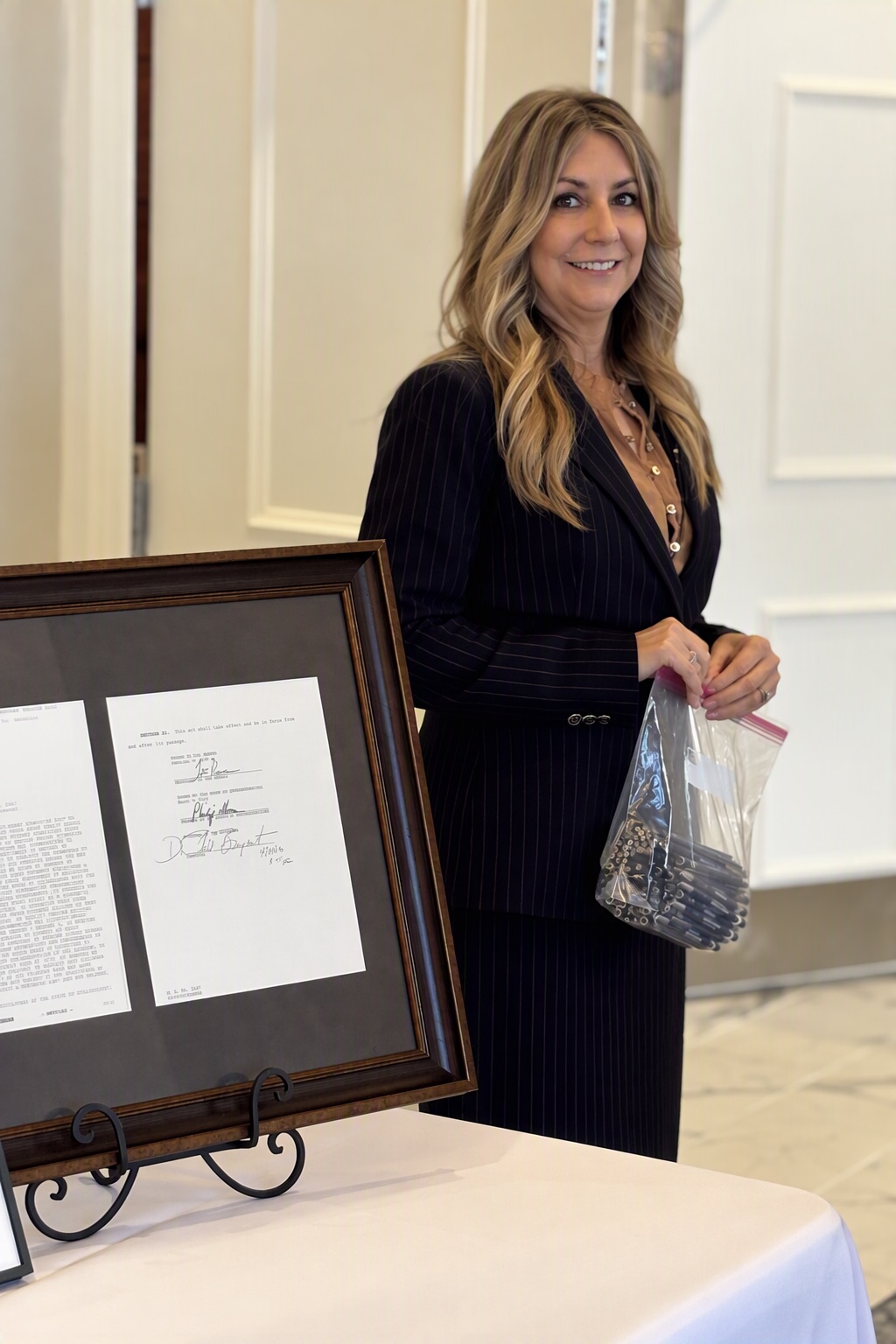
Back in the same auditorium, Governor Bryant signs the law at an antique desk from a Mississippi schoolhouse. Dr. Laurie Todd-Smith, his education policy advisor, had worked on the bill from its first draft. The date was her birthday. She has said no gift since has come close. Universal screening, reading coaches, teacher training, individual reading plans, parent notification, and a third-grade gate. Read SB 2347 →
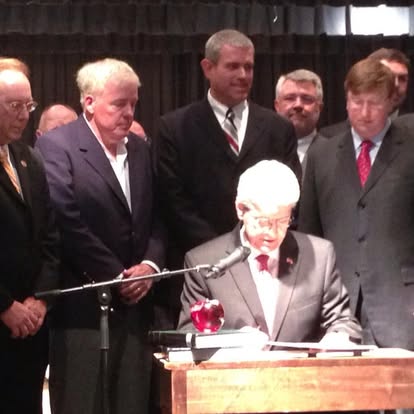
Governor Phil Bryant signs the Literacy-Based Promotion Act, April 17, 2013
April 17, 2013. Governor Bryant signs the Literacy-Based Promotion Act into law.
2014Teachers retrained, families told the truth

Mississippi becomes the first state to retrain its entire K-3 teaching force in the science of reading through LETRS, 19,000 teachers over the next several years, with coaches in the highest-need schools. At the same time, universal screening begins and parents receive written notice of their child’s reading level and the third-grade requirement. Teachers and families learn the stakes together. All eight public universities align their teacher preparation to match.

2014The Governor’s Task Force on Teacher Preparation

Governor Bryant forms a task force to fix how future teachers learn to teach reading. Every early-literacy professor at the eight public universities is trained in the science of reading and passes the same assessment, and for the first time all eight use a common syllabus and textbooks. Executive Order 1380 →

2015NAEP: 39th, the only state to gain

Two years after the law, Mississippi is the only state in the nation to post significant gains in fourth-grade reading, before most children have had a fully retrained teacher.
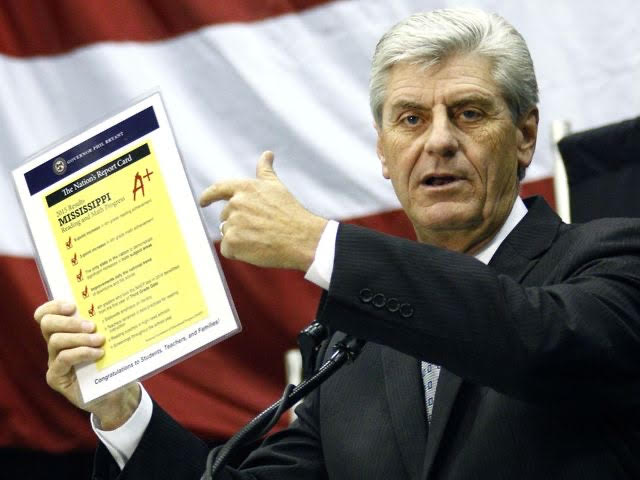
Governor Bryant holds up Mississippi’s 2015 Nation’s Report Card results
Governor Bryant displays Mississippi’s 2015 gains on the Nation’s Report Card.
2015The gate holds

Critics predicted 28 percent of third graders would be held back. The actual rate was about 8 percent, because the intervention system worked.

2017NAEP: 36th
2019NAEP: 29th, the only state to gain again

For the second time, Mississippi is the only state to post significant gains in fourth-grade reading. The national press begins to notice.

2022NAEP: 21st, the state that held

After the pandemic, reading scores fall in nearly every state. Mississippi holds its ground and keeps climbing in rank.

2024NAEP: 9th in the nation

Ninth in the nation. Mississippi ranks 9th in fourth-grade reading, first in gains since 2013, and first when adjusted for demographics. More than forty states now follow its lead.

2026The story is written down

Unveiling the Mississippi Miracle by Governor Phil Bryant and Dr. Laurie Todd-Smith tells the whole account from the inside, and The Boy Behind the Mississippi Miracle tells it to the children who will grow up never knowing it was in doubt. The books →

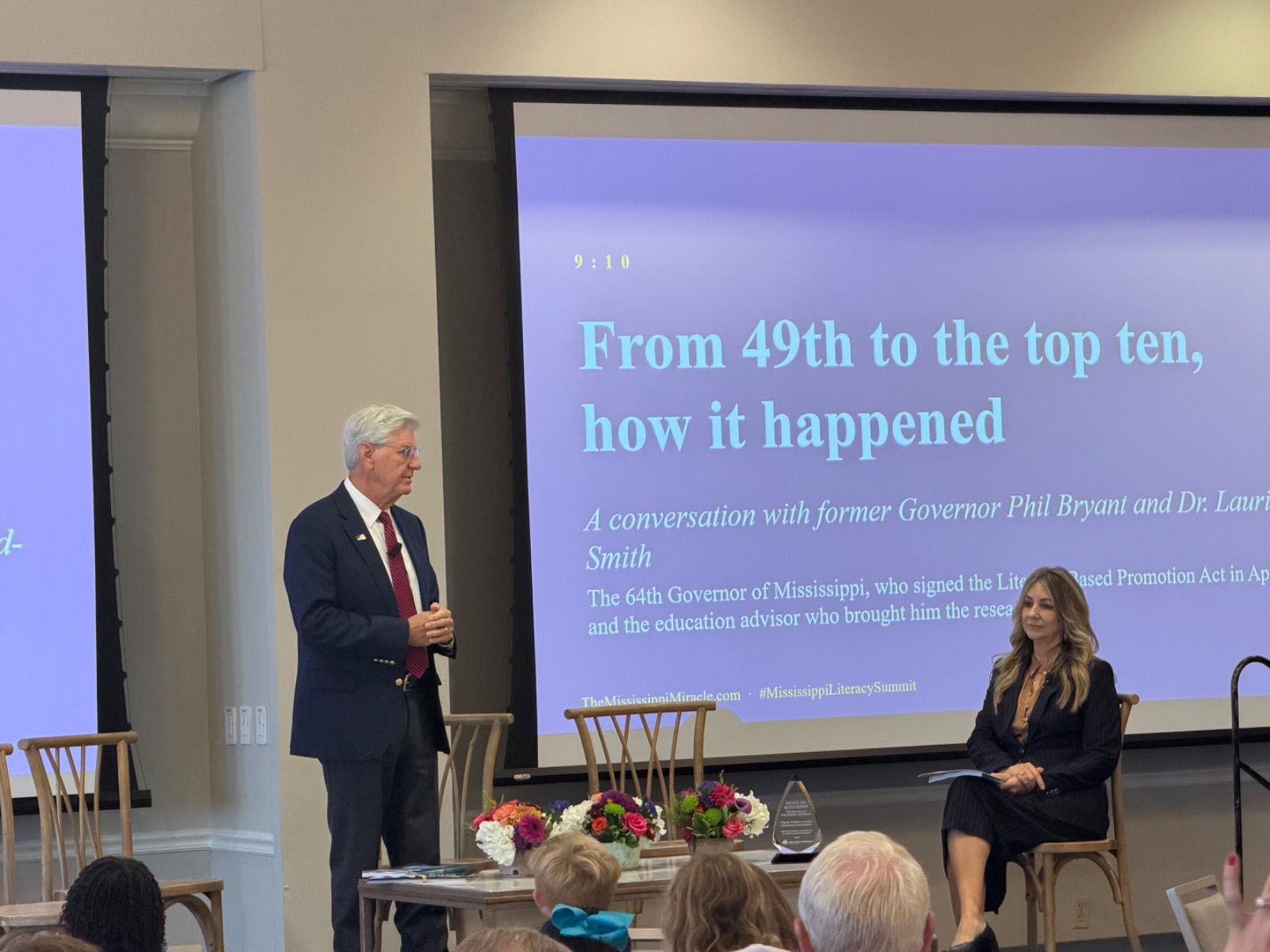
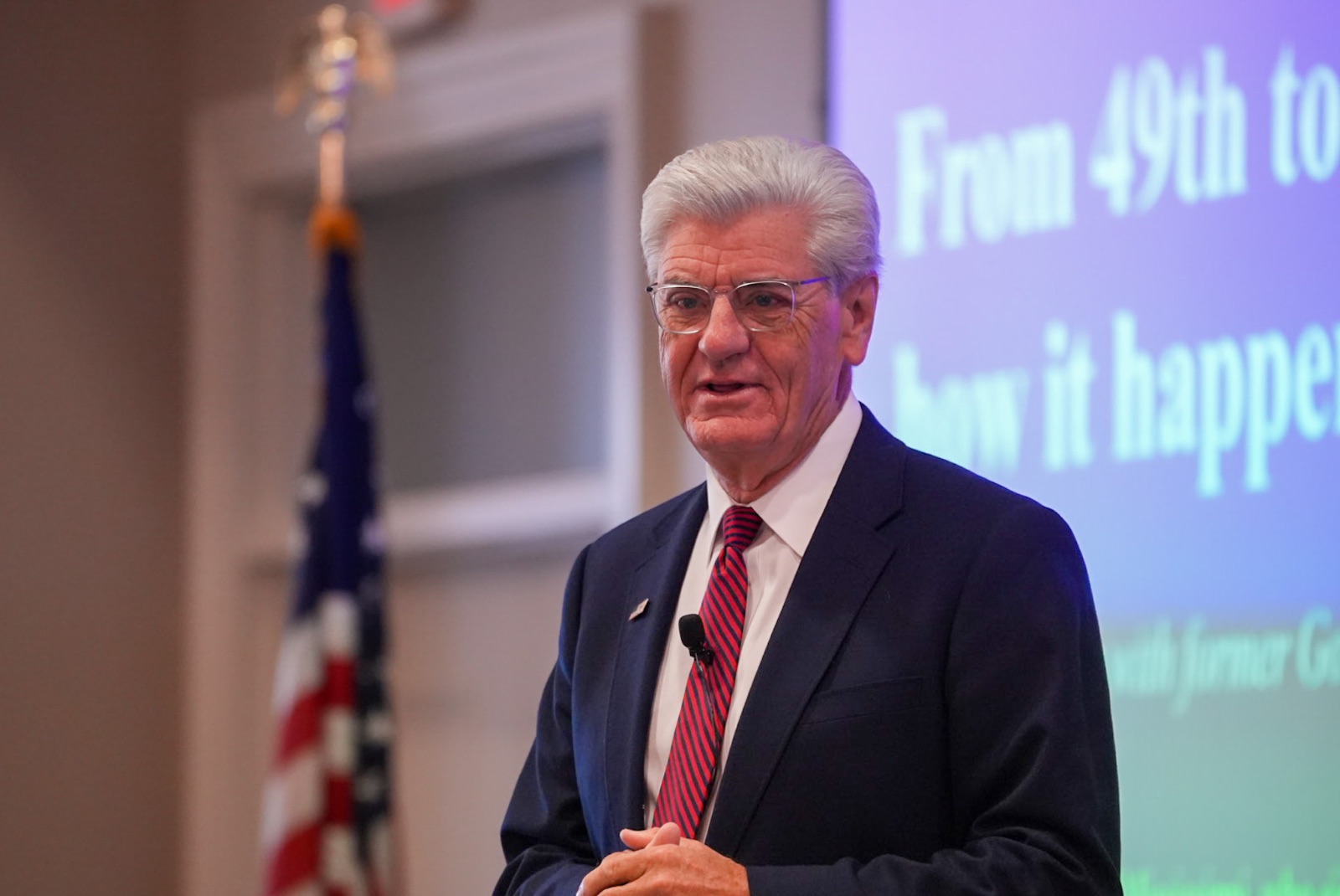
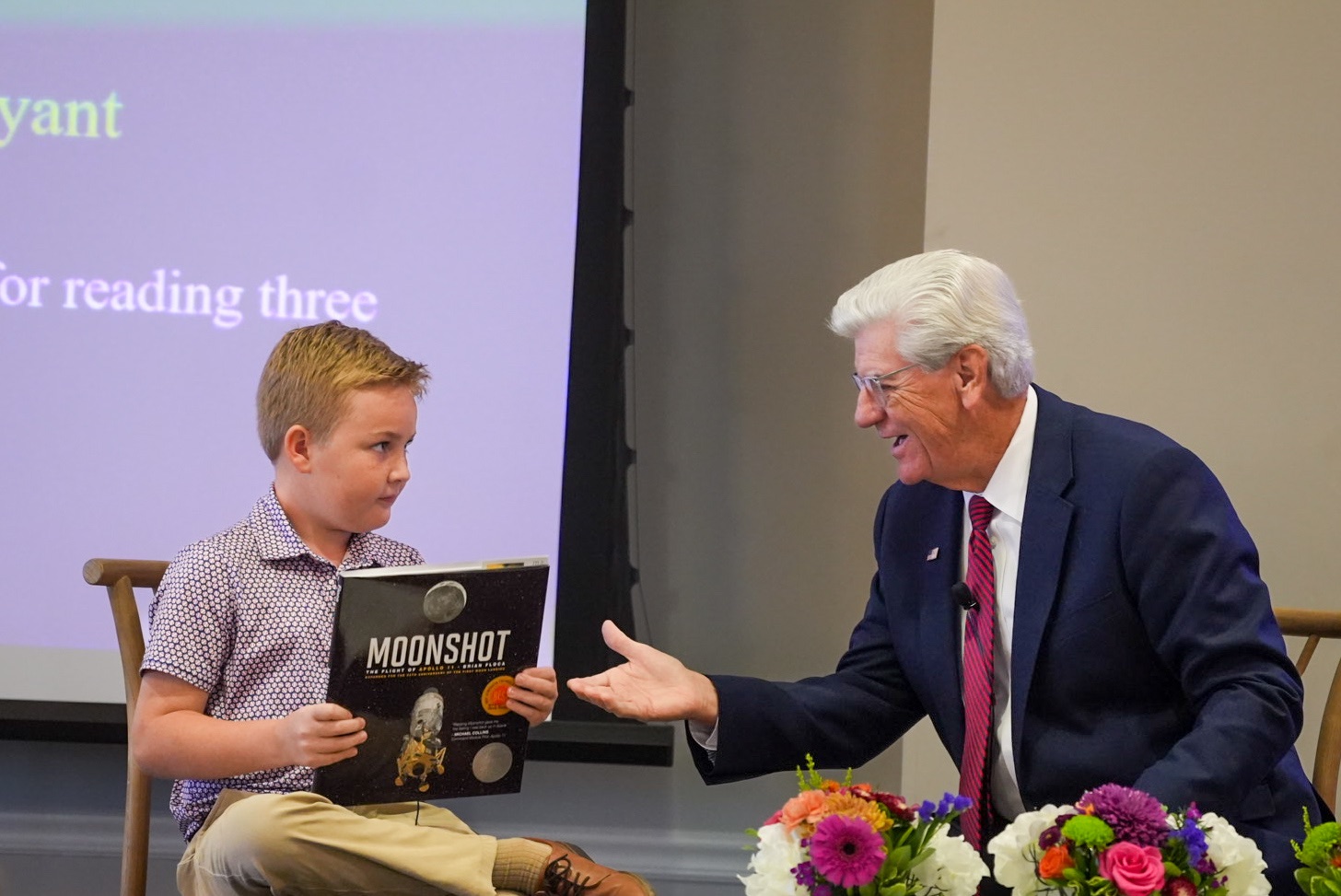
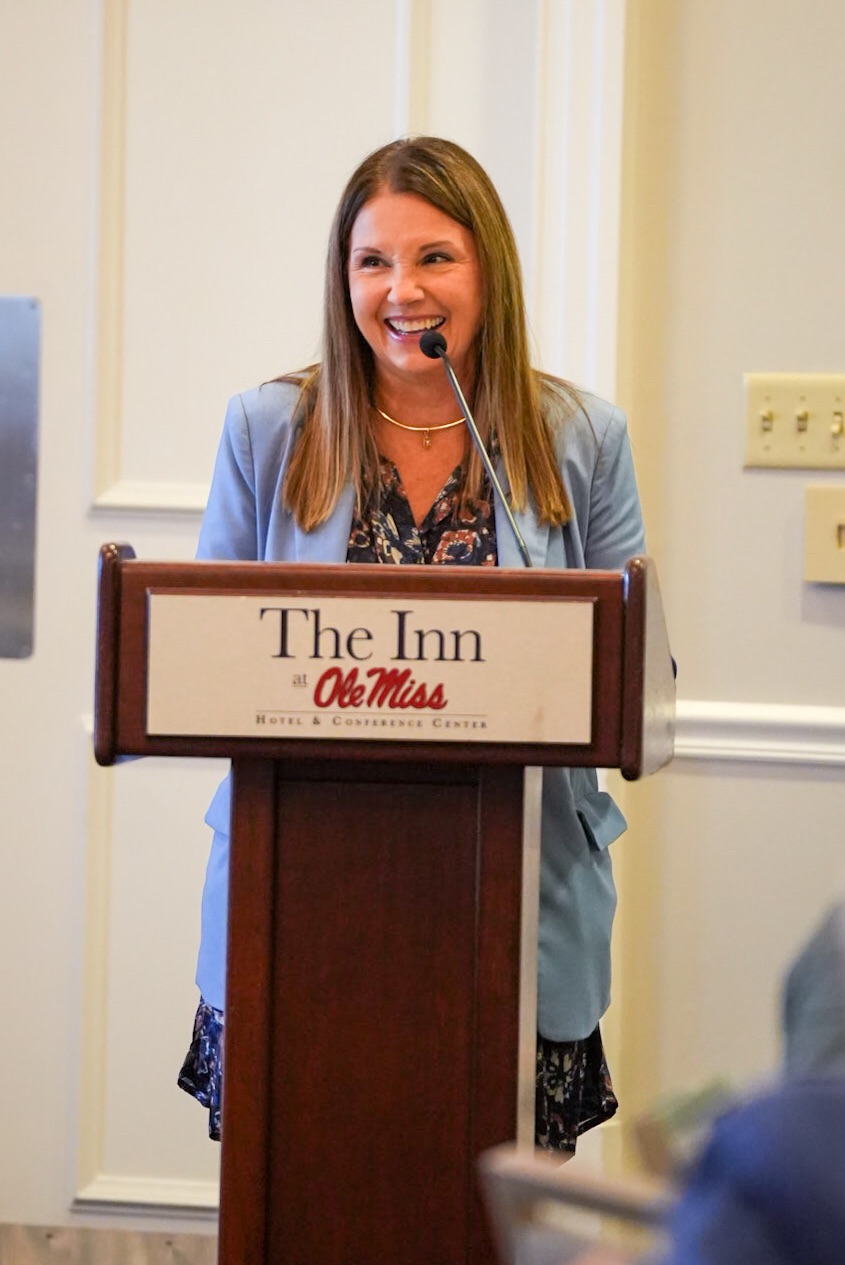
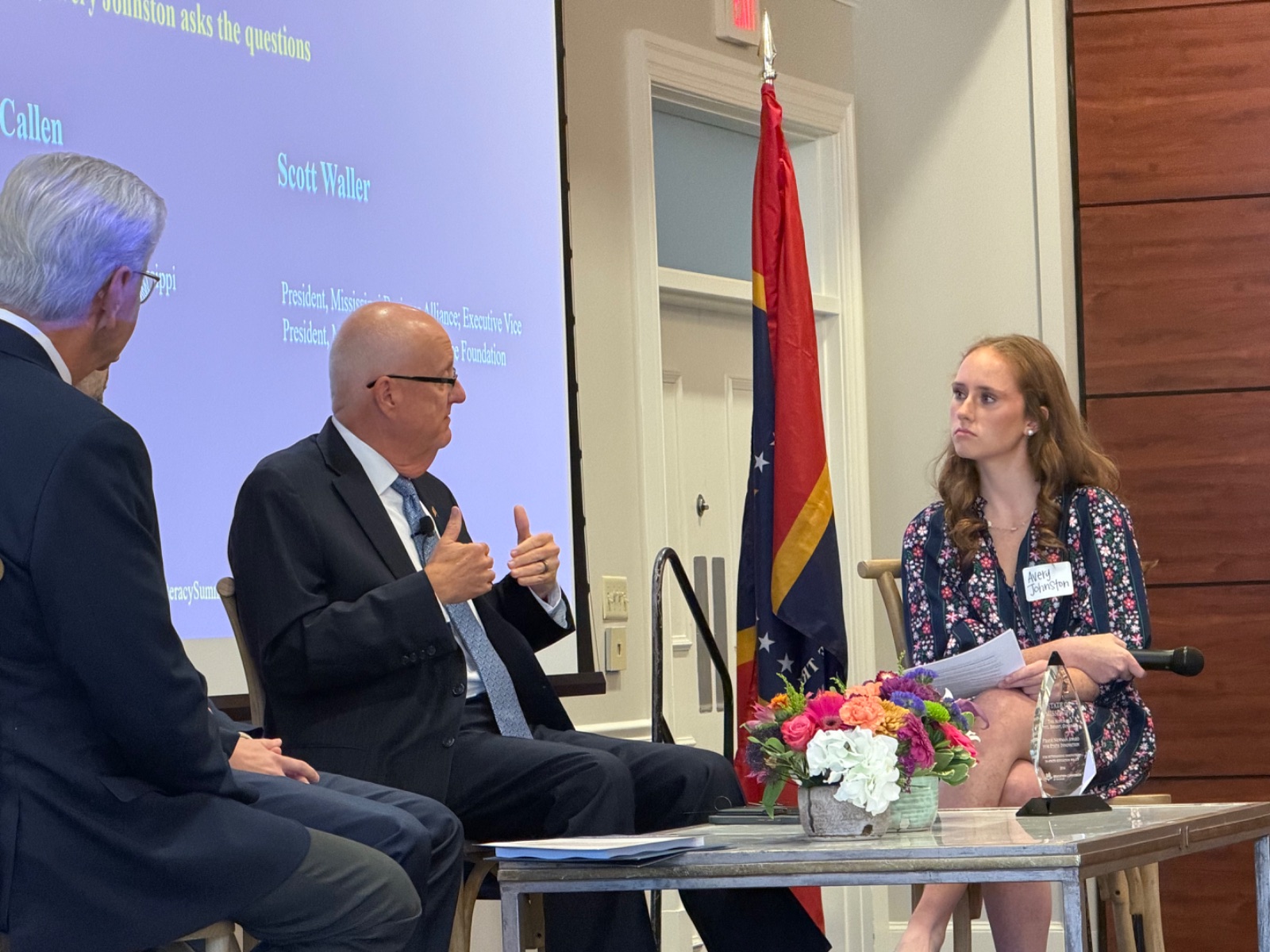
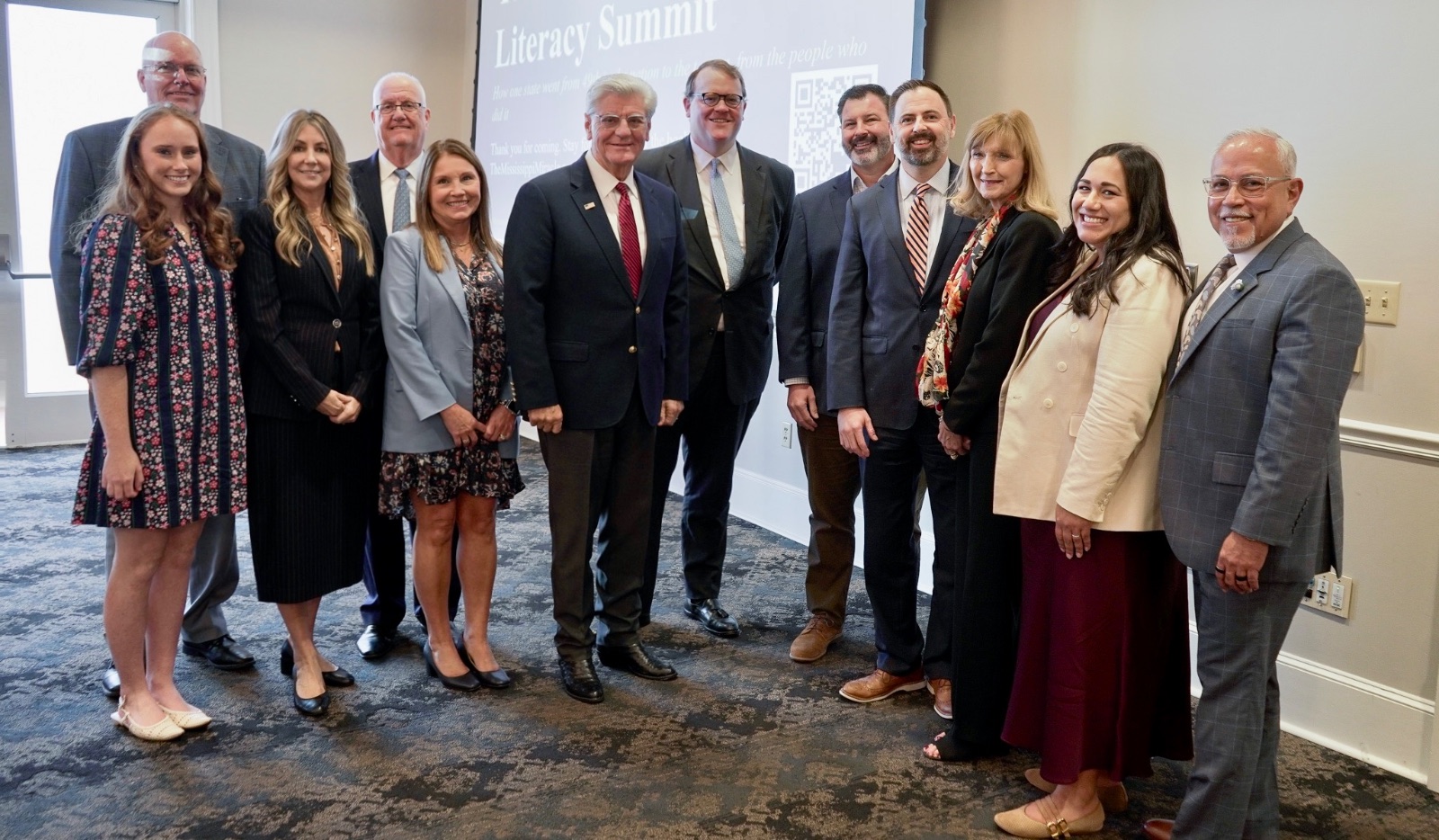
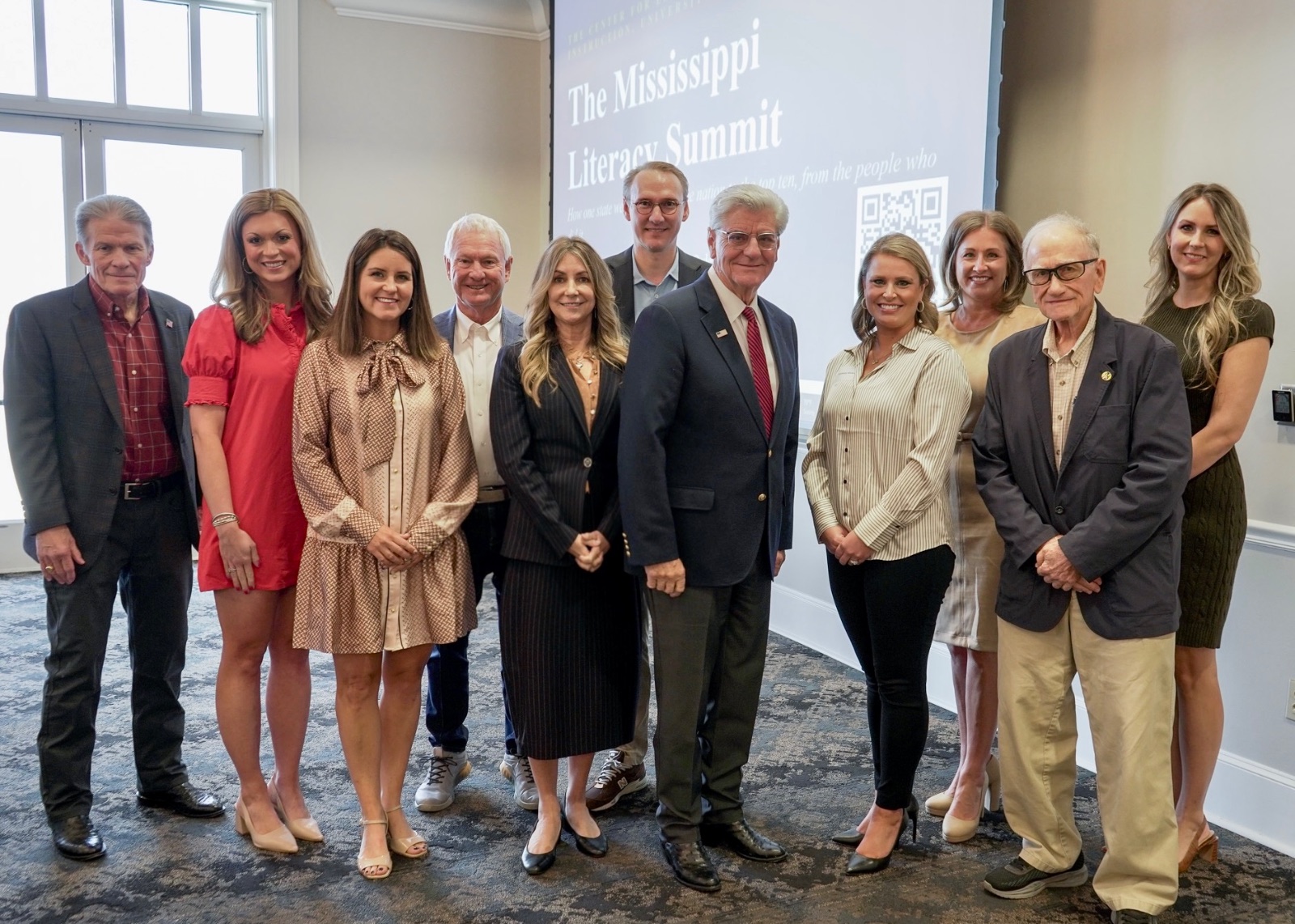
Oct. 27, 2026The Mississippi Literacy Summit

The people who built the Mississippi Miracle gathered at the University of Mississippi with the leaders carrying it to other states. Photos and program →

For teachers

The teacher is the tool that matters the most.


Teachers were never the problem. What they were given to work with was. These are the resources Mississippi’s teachers used, and the ones we point every educator to today.

Start here: the science of reading

Mississippi’s own playbook

The research behind it

Classroom guide

Reading The Boy Behind the Mississippi Miracle with your class

A read-aloud and discussion guide for grades K-4 is in production, with before-and-after questions, a phonics mini-lesson built on the red book, a “Who is your Mrs. Henley?” writing prompt, and a letter home for families. Sign up above and we will send it to you the day it is ready.

Get the guide when it ships
For school and district leaders

Thinking about bringing this to your state?

Chapter Twelve of Unveiling the Mississippi Miracle is a practical guide for governors, superintendents, and legislators: how to know your own data, how to write a prescriptive procurement, how to build a coalition that holds, and how to keep the line when the pressure comes. The authors speak to leadership groups and legislatures by request.

Request a speaker
For families

Every child deserves a Mrs. Henley.


You are your child’s first teacher. Here is what the science says about how reading happens, what to watch for, and where to turn if your child is struggling.

How reading actually works

Spoken language is natural. Reading is not. Every child has to be taught, directly, that letters stand for sounds and sounds blend into words. Singing the ABCs is a lovely start, but it teaches letter names, and it is letter sounds that unlock reading.

Dyslexia: what to know

Governor Bryant was not stupid and he was not lazy. He had dyslexia, and no one in his classroom had the tools to see it. Today, Mississippi screens every kindergartner and first grader. If your child reverses letters, guesses at words, avoids reading, or is bright but struggling, ask for a screening. Early help changes everything.

What you can do tonight

  • Talk, a lot.Vocabulary and background knowledge are half of reading comprehension. Narrate the grocery store. Ask real questions.
  • Play with sounds.Rhymes, clapping syllables, “what sound does cat start with?” This is phonemic awareness, and it is the foundation.
  • Read aloud every day.Even after your child can read alone. Twenty minutes builds language far above their own reading level.
  • Ask your school for the data.Mississippi screens three times a year and must tell you the results. Ask what the numbers say and what the plan is.
  • Limit screens, protect sleep.Young brains build language in conversation, not in front of a screen.
In the news

The record of a nation noticing


Within two years of 2023, the Mississippi Miracle had been covered by every major American newspaper, cited in congressional testimony, and named by leaders in more than forty states as the model their own reforms were built on.

The New York TimesThe Wall Street JournalThe Washington PostAssociated PressPBSNPRFox NewsLos Angeles TimesHarvard EdCastHBO

A selection is below. The complete national media index, 2013 to 2026, article by article, is an appendix in Unveiling the Mississippi Miracle. For the running conversation, search #TheMississippiMiracle on LinkedIn, X, and Facebook.

Major newspapers

Broadcast and podcasts

By the authors

The full index of national coverage, political recognition, and academic commentary from 2013 to 2026 appears as an appendix in Unveiling the Mississippi Miracle. Media inquiries are welcome.

The authors

Two people who lived this story from very different angles.


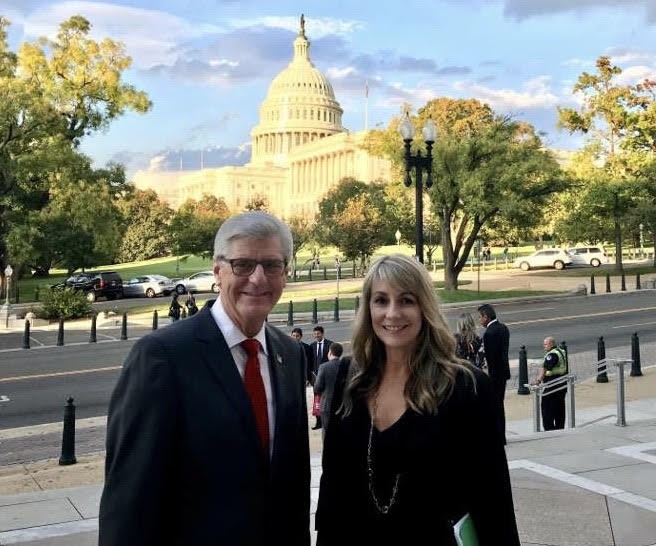
Governor Phil Bryant and Dr. Laurie Todd-Smith in Washington, D.C.
Governor Bryant and Dr. Todd-Smith in Washington, D.C.
Governor Phil Bryant

Governor Phil Bryant

64th Governor of Mississippi, 2012 to 2020

Born in Moorhead in the Mississippi Delta, Phil Bryant repeated third grade before a fourth-grade teacher taught him to read. He went on to serve as a deputy sheriff, a state representative, State Auditor, Lieutenant Governor, and two terms as Governor, winning re-election with the highest share any Republican has ever earned in a Mississippi governor’s race. In 2013 he staked his political future on a single education session and signed the Literacy-Based Promotion Act into law. He and First Lady Deborah Bryant have carried the message of early reading and dyslexia awareness into schools in every one of Mississippi’s eighty-two counties. Since leaving office he has served as a Senior Advisor at the America First Policy Institute and Vice Chair of the President’s FEMA Review Council, and in 2025 was appointed to the National Assessment Governing Board, which sets policy for the Nation’s Report Card.

Dr. Laurie Todd-Smith

Laurie Todd-Smith, Ph.D.

Educator, researcher, and senior education and workforce policy advisor to Governor Bryant

Laurie Todd-Smith began her career as a preschool and elementary teacher in Arizona and New Mexico, where she noticed her students guessing at words and quietly began bringing phonics back into her classroom years before the science of reading had a name. She directed Mississippi Building Blocks for the Barksdale Reading Institute, led the State Early Childhood Advisory Council, and served as Governor Bryant’s education and workforce advisor during the 2013 reform, where legislators on both sides of the aisle came to know her as “Dr. Education.” She later directed the U.S. Department of Labor’s Women’s Bureau, led education and child policy at the America First Policy Institute, and in 2025 returned to federal service as Deputy Assistant Secretary for Early Childhood Development at the U.S. Department of Health and Human Services. She now serves as Advisor to the Secretary at the U.S. Department of Education. She holds a doctorate in education from Mississippi State University. She has spent more than three decades on one idea: every child can learn to read, and every teacher deserves the tools to teach them.

Get in touch

Bring the Mississippi Miracle to your state, district, or school.


Media inquiries, bulk and classroom orders, and questions from teachers and families are all welcome.

Speaking requests

Governor Phil Bryant and Dr. Laurie Todd-Smith speak to legislatures, state boards, school districts, education conferences, civic groups, and literacy organizations about how Mississippi did it and what it takes to do it elsewhere. Both are available for keynotes, panels, and book events, together or individually, and for readings of The Boy Behind the Mississippi Miracle in schools and libraries.

Request Governor Bryant Request Dr. Todd-Smith Book event or school reading
Email us
LinkedIn X Facebook